
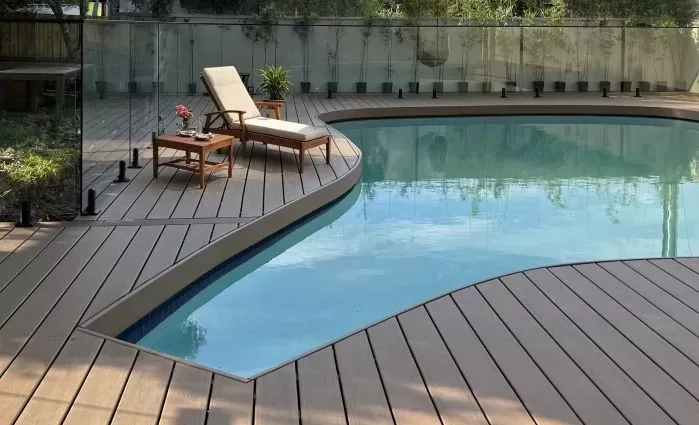
Step onto the wrong deck on a hot Sydney afternoon and you feel it straight away – boards that scorch bare feet, slippery patches near the waterline, or timber that already looks tired after a few seasons. A good poolside deck materials guide is not just about picking a colour you like. It is about choosing a surface that suits the way your family uses the space, handles harsh sun and moisture, and still looks sharp years from now.
Around pools, material choice matters more than it does in many other parts of the home. The deck has to cope with splashing, chlorine or salt, UV exposure, entertaining traffic, and the daily reality of wet feet. It also needs to sit comfortably within the wider design of the backyard, whether that means a clean modern finish or something warmer and more natural.
What matters most in a poolside deck materials guide
When homeowners compare decking options, the conversation often starts with appearance. That is understandable, but around a pool the practical details deserve equal attention. Slip resistance, surface temperature, maintenance demands, structural stability and long-term durability all play a part.
The right choice depends on how you want to live with the deck once it is built. Some clients are happy to oil timber and enjoy the natural variation that comes with it. Others want a low-maintenance surface that keeps its finish with minimal ongoing effort. Neither approach is wrong. It comes down to priorities, budget and the standard of finish you want to maintain over time.
Timber decking around pools
Timber remains a popular poolside choice because it brings warmth and character that manufactured materials often try to imitate. In the right setting, natural hardwood can lift the entire backyard and make the pool area feel more like a resort than a standard suburban renovation.
Why timber appeals
Hardwood decking has a genuine visual depth that many homeowners love. Grain variation, natural tones and a slightly softer look can work beautifully alongside landscaping, stone coping and garden planting. For homes with a more organic, architectural or premium coastal feel, timber often looks immediately at home.
It can also be a strong long-term material when the species is chosen carefully and the deck is built properly. Dense hardwoods are known for durability and strength, which is why they are still widely specified for high-end outdoor builds.
The trade-offs with timber
Timber asks more from the owner. Around a pool, regular cleaning and periodic oiling or recoating are usually part of the package if you want the boards to keep their colour and condition. Without that upkeep, the deck may weather to a silvery grey, and in some cases moisture movement can lead to minor cupping, splitting or surface checking over time.
Heat can also vary depending on species, colour and exposure. Darker boards in full sun will naturally feel warmer. Slip resistance is another detail that needs proper planning, especially where water regularly splashes onto the deck. Board profile, finish and maintenance all influence how the surface performs.
When timber makes the most sense
Timber is usually the right fit for homeowners who value natural beauty and are comfortable with ongoing care. It suits premium homes where the deck is part of a broader landscape design and where the material is being chosen as an architectural feature, not just a practical surface.
Composite decking around pools
Composite decking has become a serious contender for pool areas, particularly for families who want a clean, refined finish without the maintenance routine of natural timber. Modern composite boards offer a much more sophisticated appearance than older products, and premium ranges now give homeowners strong aesthetic flexibility.
Why composite works well poolside
The main drawcard is lower maintenance. Composite boards do not need oiling, staining or sealing in the same way timber does, which makes them attractive for busy households and investment-minded property owners. They are also resistant to rot, splintering and many of the issues people associate with ageing timber decks.
For pool surrounds, that can be a real advantage. Bare feet, wet traffic and frequent entertaining are easier to manage when the surface remains stable and easy to clean. Quality composite boards are also manufactured for consistent performance, which appeals to homeowners who want a more predictable long-term result.
Not all composite is equal
This is where many buying decisions go wrong. Composite is not one single product category with equal quality across the board. Entry-level options can perform very differently from premium brands in areas such as fade resistance, heat retention, board stability and surface finish.
That matters around pools. A cheap board that looks acceptable at installation may not deliver the same result after years of Sydney sun and exposure. Premium products from established manufacturers tend to offer stronger warranties, better engineering and more convincing finishes. For homeowners investing in a high-value outdoor area, that difference is usually worth serious attention.
The trade-offs with composite
Composite is low maintenance, not no maintenance. It still needs cleaning, and some products can become hot under direct summer sun. Surface texture also varies from brand to brand, so slip performance should be assessed carefully rather than assumed.
Some homeowners also simply prefer the authenticity of real timber. Even the best composite boards are designed to replicate a natural material, and for certain architectural styles that distinction still matters.
Comparing timber and composite in real-world terms
If your main priority is natural appearance and timeless character, hardwood timber remains hard to beat. If your priority is lower upkeep and consistent performance, premium composite often comes out in front.
For families with young children who are in and out of the pool all summer, composite can be a practical solution because it avoids splinters and reduces ongoing maintenance pressure. For design-led homes where material richness is a major part of the brief, hardwood may justify the extra care.
Budget needs to be viewed over the full life of the deck, not just the upfront build cost. Timber can be cost-effective at installation depending on species and design, but the maintenance commitment adds up. Composite often costs more initially, especially in premium ranges, yet may deliver stronger value over time for owners who want fewer maintenance demands.
Poolside safety and compliance should never be an afterthought
A beautiful deck still has to function safely. Around pools, slip resistance, edge detailing, stairs, transitions and balustrades all need to be considered as part of the design, not tacked on at the end.
This is one reason a proper poolside deck materials guide should always include build quality, not just board selection. Subframe design, board spacing, fixing methods and drainage all influence performance. Water needs a path to escape. Boards need room to behave as conditions change. Safety features need to meet relevant requirements while still looking integrated with the space.
Done properly, the deck should feel effortless to use. That takes planning and precise construction.
Choosing the right finish for Sydney conditions
Sydney homes deal with strong UV exposure, sudden downpours, humidity and long warm seasons where outdoor areas see heavy use. Poolside materials need to stand up to all of that while still complementing the architecture of the property.
Lighter colours often make sense around pools because they can feel cooler underfoot and create a brighter, cleaner look. In contemporary homes, pale greys, soft ash tones and refined timber-look boards are often popular. For more classic or landscaped settings, richer timber tones can add warmth and contrast beautifully against stone, greenery and water.
The best result usually comes from considering the whole outdoor space together – the pool coping, fencing, pergola, privacy screening, stairs and deck material should all feel connected. That is where experienced design input becomes valuable, because the right material is not just durable on paper. It needs to suit the home.
How to make the right decision
If you are narrowing down options, start with three questions. How much maintenance are you realistically willing to do? How important is a natural timber look compared with long-term convenience? And how heavily will the pool area be used by family and guests?
From there, look beyond sample boards in isolation. Ask how the material behaves in direct sun, how it feels under bare feet, what maintenance it needs in year three or five, and how it integrates with stairs, screens and other custom features. That is the difference between choosing a board and planning a deck that will still perform and look right years later.
For many Sydney homeowners, the best answer is not the cheapest material or the trendiest finish. It is the one that matches your lifestyle, the property, and the standard you want the space to hold over time. At UrbanArch Building, that is exactly how we approach material selection – with a focus on performance, appearance and a finished result that feels built for the way you live. That’s the same approach we take on pool decks on the North Shore, where the barrier rules and the fall of the block usually decide the detailing before the board colour does.
A poolside deck should make the whole backyard easier to enjoy, not harder to maintain. Choose the material with your future weekends in mind.