
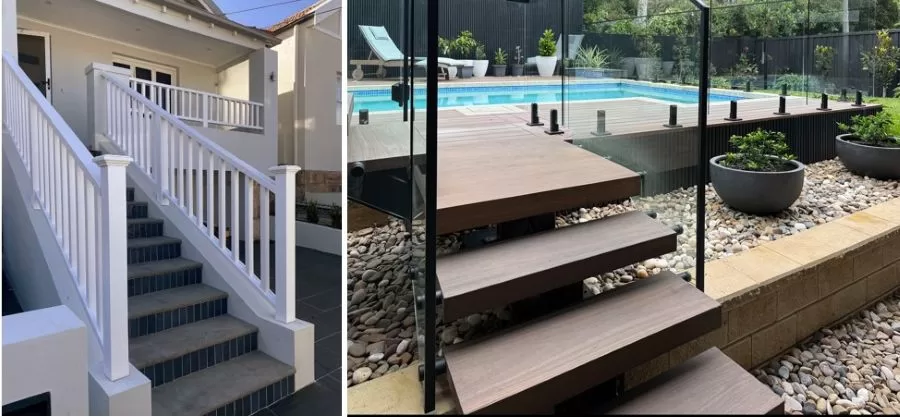
A handrail usually gets attention after someone misses a step in the rain. That is why outdoor stair handrail installation should never be treated as a last-minute add-on. On a deck, entry stair or poolside walkway, the right handrail improves safety, finishes the look of the space, and helps ensure the stairs feel solid and comfortable to use every day.
For Sydney homes, there is another layer to get right. Outdoor stairs deal with hard sun, sudden downpours, coastal air in many suburbs, and regular wear from family life and entertaining. A handrail needs to do more than pass a quick visual check. It needs to be properly designed, fixed securely, and built from materials that can handle the conditions over time.
Why outdoor stair handrail installation matters
A well-built handrail does two jobs at once. First, it gives people support as they move up and down the stairs, which is especially important for children, older residents, guests, and anyone carrying bags, serving platters or pool gear. Second, it brings visual structure to the stair run, making changes in level easier to read.
The practical benefit is obvious, but the design benefit matters too. On a premium outdoor build, the handrail should feel like part of the architecture rather than an afterthought. The profile, finish, post spacing and material choice all influence whether the stair feels refined or pieced together.
There is also the compliance side. Depending on the stair layout, height and broader project scope, handrails and balustrades may need to meet specific code and safety requirements. That is where many DIY installations come unstuck. A rail can look acceptable and still be the wrong height, the wrong shape to grip comfortably, or fixed in a way that will loosen over time.
What to consider before installation
Before any fixing starts, the stair itself needs to be assessed properly. The rise and going of each step should be consistent, the framing should be structurally sound, and the surfaces should be suitable for the intended fixing method. There is no point installing a premium rail onto stairs that move, twist or hold water.
The next question is how the handrail will be used. A narrow set of stairs from a back deck may need a straightforward wall or post-mounted rail. A wider staircase may call for a more integrated solution with balustrading, especially if there is an exposed edge or a drop beside the stairs. The right answer depends on the site, the users, and the style of the outdoor area.
Material selection is just as important. In Sydney conditions, timber can look beautiful and feel warm in the hand, but it needs the right species, proper sealing and ongoing maintenance. Powder-coated aluminium is low maintenance and works well in contemporary homes. Stainless steel suits some settings, particularly where corrosion resistance matters, but it needs the right grade and detailing. Composite elements can also be a strong choice in certain designs, especially when paired with low-maintenance decking.
Outdoor stair handrail installation and compliance
This is the point where professional advice pays for itself. Outdoor stair handrail installation is not only about attaching a rail to posts and calling it done. Height, continuity, clearance from adjacent surfaces, load resistance and overall geometry all matter.
In many projects, the handrail sits alongside balustrade requirements, which means the design has to be considered as one system rather than separate components. If the stairs connect to a deck, upper landing or pool area, there may be multiple compliance factors in play. It depends on the total height, whether the edge is open, and how the stairs are accessed.
For homeowners, the safest approach is simple: do not guess. A handrail that is slightly off in height or poorly anchored can create a real issue during certification, resale, or everyday use. Good builders account for these details early so the finished result looks clean and performs properly.
Choosing the right material for Sydney conditions
Timber remains a favourite for many outdoor spaces because it brings natural character and pairs beautifully with hardwood decks, screens and pergolas. When detailed well, a timber handrail can feel substantial and premium. The trade-off is upkeep. Exposure to UV, moisture and temperature swings means coatings need attention, and some species perform better than others in exposed settings.
Aluminium is often the practical standout. It is clean-looking, durable and relatively low maintenance, which suits busy households that want a polished finish without ongoing sanding or staining. Powder-coated finishes also make it easier to match the handrail to window frames, balustrades or exterior trim.
Stainless steel can work particularly well in coastal or highly contemporary homes, but not all stainless products are equal. The grade, finish and installation detailing make a big difference to long-term performance. In some homes, stainless can look too commercial if the rest of the exterior is warm and textural, so the aesthetic fit needs to be considered as carefully as durability.
Composite options can be useful where homeowners want a coordinated look with composite decking and lower maintenance over time. The key is choosing a system that has proven outdoor performance and suits the structural demands of the stair.
The installation details that make the difference
Most handrail problems are not caused by the rail itself. They come from weak fixing points, poor post alignment, or shortcuts taken during the build. On exterior stairs, every connection must cope with movement, weather and repeated use.
Posts should be anchored into framing or other properly engineered structural elements, not just surface-fixed into material that cannot carry the load. Brackets, bolts and screws need to be suitable for outdoor use and compatible with the chosen materials. This is especially important where different metals meet, as corrosion can become a problem if the wrong fixings are used.
Drainage also matters more than people expect. If water can sit around post bases, inside hollow sections or against timber joints, the handrail may deteriorate well before it should. Smart detailing helps water shed away, reduces maintenance issues and extends the life of the entire stair system.
Comfort is another often-overlooked detail. A rail should be easy to grip, pleasant to use and positioned naturally along the stair line. If it is too bulky, awkwardly shaped or interrupted where support is needed, it will never feel right no matter how good it looks in photos.
Design matters as much as safety
A handrail should support the overall design of the outdoor space. In a high-end backyard, visual consistency matters. The stair rail should connect with the deck boards, privacy screens, cladding, fencing or pergola rather than appearing as a separate item chosen at the last second.
For a modern home, slim aluminium posts with a clean top rail may suit the architecture best. For a more natural or resort-style space, hardwood detailing can soften the transition between house and garden. In some projects, mixed materials create the right balance, such as timber for warmth and metal for strength and reduced maintenance.
This is where a custom approach often outperforms off-the-shelf kits. Standard systems can work for straightforward applications, but they rarely address the finer details of slope, landing transitions, matching finishes and architectural proportion. Bespoke design gives you a better fit both visually and structurally.
DIY or professional installation?
There are simple stair layouts where a capable DIY installer may be able to fit a basic handrail correctly. Even then, the margin for error is smaller than many people assume. Minor mistakes in set-out, height, fixing or post spacing can compromise both safety and appearance.
For more complex stairs, elevated decks, pool surrounds or premium homes, professional installation is usually the better choice. It reduces compliance risk, results in cleaner detailing, and ensures the handrail actually complements the rest of the outdoor build. It also saves the frustration of trying to make a standard product work on a site that needs a custom solution.
That is particularly relevant when the handrail forms part of a larger upgrade. If you are already investing in new decking, stairs or balustrades, it makes sense to have the entire system designed and built together. UrbanArch Building often sees better long-term outcomes when stairs, rails and surrounding deck elements are resolved as one coordinated package rather than pieced together over time.
When to replace an existing outdoor handrail
Not every project starts from scratch. Sometimes the stair is serviceable, but the handrail is loose, dated or no longer suited to the home. Wobble at the posts, visible rust, splitting timber, sharp edges and inconsistent height are all signs the existing rail may need more than a cosmetic touch-up.
Replacement is also worth considering when the broader outdoor area is being refreshed. A new deck surface with an old, bulky handrail can drag down the whole result. Updating the rail often improves both safety and street appeal far more than homeowners expect.
The best outdoor stair handrail installation is one that feels obvious once it is there. Safe underfoot, comfortable in the hand, visually aligned with the home, and built to cope with Sydney conditions year after year. If you are planning new stairs or upgrading an existing outdoor space, it is worth treating the handrail as a design and construction priority, not a finishing extra.