
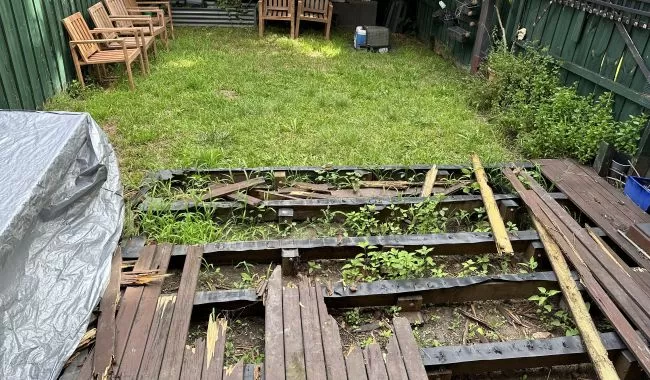
A deck rarely fails all at once. More often, it starts with a soft board near the barbecue, a handrail that moves more than it should, or stairs that feel slightly off underfoot. If you are asking when should a deck be replaced, the real question is usually whether the structure is still safe, worth repairing, and capable of giving you the outdoor space you actually want.
For Sydney homeowners, that answer depends on more than age alone. Sun exposure, moisture, salt air, drainage, material choice, maintenance history and the original build quality all affect how long a deck lasts. Some decks can be restored and upgraded. Others have reached the point where replacement is the smarter investment.
When should a deck be replaced instead of repaired?
A deck should generally be replaced when structural elements are failing, widespread rot or corrosion is present, repairs are becoming repetitive, or the layout no longer suits how you use the space. Surface wear by itself does not always mean the whole deck has to go. The critical issue is whether the problem is cosmetic, localised, or built into the frame.
If only a few boards are cracked, weathered or splintering, a targeted repair may be enough. If the subframe is compromised, the fix becomes far more serious. Once joists, bearers, posts, fixings or connections start to deteriorate, patch repairs can turn into a short-term spend on a long-term problem.
This is where many homeowners get caught. A deck may still look acceptable from a distance while hiding issues underneath. Timber can decay from trapped moisture. Steel components can corrode in coastal conditions. Older builds may also fall short of current expectations for safety, stability and compliance, especially around balustrades, stairs and load-bearing sections.
The clearest signs your deck may need replacing
The biggest red flag is movement. A quality deck should feel solid underfoot. If it bounces, sags, rocks or shifts, there may be structural weakness below the surface. That is not something to ignore or cover up with new boards.
Rot is another major warning sign, especially in timber decks exposed to poor drainage, pool splash, leaf build-up or shaded damp areas. If you can press into timber with a screwdriver and it gives easily, or if boards and framing feel soft or spongy, decay may already be advanced.
Visible damage also matters. Splits, warping and cupping on isolated boards can often be repaired, but widespread distortion usually points to deeper moisture issues or material breakdown. Corroded screws, rusted brackets, loose fixings and separating joints are equally serious because deck strength depends on the integrity of these connections.
Then there are the safety features people tend to overlook. Loose handrails, wobbly balustrades, unstable stairs and uneven transitions create real hazards, particularly for families, older residents and homes used for entertaining. If these issues are part of a broader ageing deck, replacement often delivers a better and safer result than piecemeal repairs.
Age matters, but not in a simple way
There is no single replacement age that applies to every deck. A well-built hardwood deck that has been properly maintained can last for decades. A lower-quality timber deck exposed to harsh weather and limited upkeep may deteriorate much sooner. Composite decking can offer excellent longevity, but even then, subframe condition remains crucial.
As a rough guide, once a deck moves into the 15 to 25-year range, it is worth having the full structure assessed, particularly if signs of wear are already appearing. Older decks are not automatically unsafe, but they are more likely to have accumulated hidden issues over time.
The key point is that age should trigger inspection, not panic. Some decks are worth preserving. Others have reached the stage where replacement gives better value, better performance and a much better outdoor living outcome.
Repair, resurface or replace?
This is usually the most practical decision point for homeowners. If the frame is sound and the problem is mainly on the surface, resurfacing can be a smart option. That might involve replacing deck boards, updating rails, refinishing visible elements and improving the appearance without rebuilding from scratch.
If parts of the structure have failed but the rest is solid, a partial rebuild may be possible. However, partial work has limits. New materials can expose weaknesses in the old sections. Matching levels, finishes and compliance details can also become awkward, especially on older decks.
Full replacement makes more sense when the cost of repairs starts approaching the value of a new build, when safety is in question, or when you want to change the layout, add features or move to a lower-maintenance material. For many Sydney homes, replacement is not just about solving deterioration. It is also an opportunity to create a more usable, better-looking space that suits modern living.
Why replacement can be the better investment
Homeowners often hesitate at the idea of replacing a deck because repair feels cheaper. In the short term, it often is. But repeated repairs, ongoing maintenance and lingering structural concerns can cost more over time while still leaving you with an outdoor area that feels tired.
A new deck allows you to fix the underlying issues properly. It also gives you the chance to improve size, flow, privacy and finish. You may want integrated stairs, safer balustrades, built-in seating, screening, or better transitions to the garden or pool area. If the existing deck never really worked for the way your household uses the space, replacement can solve more than deterioration.
Material choice matters here too. Many homeowners replacing older timber decks consider premium composite products because they want the look of a refined outdoor area without the sanding, oiling and regular upkeep. Others still prefer natural hardwood for its warmth and character. The right choice depends on budget, aesthetic goals, sun exposure and how much maintenance you are willing to take on.
Sydney conditions can shorten a deck’s lifespan
Decks in Sydney deal with intense UV, heavy rain events, humidity and, in some suburbs, salt-laden coastal air. These conditions are hard on both timber and metal components. Even a beautiful deck can deteriorate faster if water is not draining properly, airflow is limited below the structure, or maintenance has been delayed for years.
Pool decks have their own pressure points. Constant moisture, chemical exposure and bare-foot traffic can accelerate wear and create slip and safety concerns. Elevated decks also deserve close attention because failure in posts, fixings or balustrades carries higher risk.
This is why local assessment matters. A replacement decision should be based on actual site conditions, not generic lifespan estimates pulled from overseas articles or product brochures.
What a professional inspection should look for
A proper deck inspection goes beyond the visible top surface. It should assess the condition of the boards, subframe, supports, fixings, stairs, handrails and balustrades, along with signs of moisture damage, movement and compliance concerns.
The most useful inspection also considers function. Is the deck size right for the space? Does it connect well to the home? Are the stairs safe and comfortable? Is privacy lacking? Are there opportunities to improve durability with better materials or smarter design details?
That broader view matters because a replacement project should not simply replicate old problems with new boards. It should deliver a stronger, safer and more enjoyable outdoor area that suits the home and the way you live.
When should a deck be replaced for lifestyle reasons?
Not every replacement is driven by failure. Sometimes the deck is technically standing, but it no longer adds enough value to justify keeping it. That might mean it looks dated, needs constant maintenance, feels too small for entertaining, or does not complement the style of the house after a renovation.
In these cases, replacement is less about necessity and more about making the outdoor space work harder. A premium deck can lift visual appeal, improve day-to-day liveability and support property value, particularly when it is designed as part of a complete outdoor setting rather than an isolated platform.
For homeowners planning to stay long term, that can be a very sensible reason to rebuild. You are not just replacing a structure. You are upgrading how the home functions.
If your deck feels unstable, shows signs of widespread rot or corrosion, or keeps demanding repairs without really improving, it is probably time to stop patching and start planning properly. The best next step is an honest assessment of the structure, the risks and the opportunity to build something that will last. At UrbanArch Building, that conversation is often where homeowners realise a replacement is not a setback at all. It is the start of a better outdoor space.