
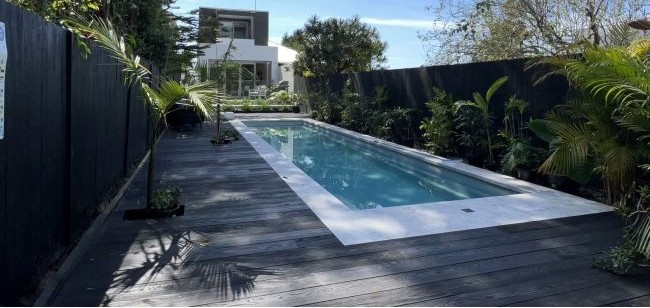
Building a deck near the coast?
Coastal conditions are unforgiving — we help Sydney homeowners pick the right material and build it to last, salt, sun and all. A father-and-son team who'll look after you like family.
Send us a message Call 0413 185 735Salt in the air changes the rules for outdoor building. A deck that performs beautifully inland can start showing wear far sooner near the coast, where UV, moisture, wind and airborne salt work on every board, fixing and finish. If you are weighing up the best decking materials for coastal homes, the right choice is less about trends and more about how the material handles harsh exposure over time.
For Sydney homeowners, that usually means balancing three things carefully: durability, maintenance and appearance. Some people love the warmth of real timber and are happy to oil it regularly. Others want a low-maintenance surface that still looks refined year after year. Neither approach is wrong, but the coastal setting makes the trade-offs clearer.
What coastal conditions do to a deck
Coastal decks deal with more than rain. Salt-laden air can accelerate corrosion in fixings and hardware, strong sun can bleach and dry out surfaces, and regular moisture swings can cause expansion, contraction and surface wear. If the home is elevated or directly exposed to sea breezes, wind-driven rain and sand can add another layer of stress.
That is why material selection cannot be separated from the full build. The decking boards matter, but so do subframe choices, fastening systems, ventilation, drainage and the quality of installation. A premium board installed poorly will not outperform a well-specified system built properly for the site.
Best decking materials for coastal homes: what actually works
The best option depends on how close the property is to the water, how much maintenance you are comfortable with, and the finish you want underfoot. In most coastal projects, the strongest contenders are composite decking, capped PVC decking and selected hardwood timbers. After an idea of how much your new deck might cost – try our Deck Calculator for an instant estimate.
Composite decking
Composite decking is one of the most practical choices for coastal homes, particularly for homeowners who want a high-end look without ongoing sanding, staining and oiling. Quality composite boards are made to resist moisture, fading and everyday wear better than many traditional timber products, which makes them well suited to exposed outdoor living areas.
For coastal use, not all composite is equal. Lower-grade products can be more prone to staining, surface fading or expansion issues, especially in full sun. Premium capped composites offer better protection because the outer shell helps shield the core from moisture and weathering. That added protection matters when decks are exposed to salt spray, pool water and regular entertaining.
Composite also appeals to families because it is generally comfortable, splinter-free and consistent in appearance. The trade-off is that it does not weather like natural timber. If you want organic variation, grain movement and the character that comes with real wood, composite can feel more controlled and uniform.
Capped PVC decking
If the site is extremely exposed, capped PVC is often worth serious consideration. It is highly resistant to moisture and does not contain timber fibres in the same way many composite products do, which can make it especially strong in wet and salty environments.
This category suits homeowners who prioritise durability and minimal upkeep above all else. It performs well around pools, on rooftops and in coastal settings where constant exposure is a concern. It also tends to be lighter than some alternatives, which can help in certain structural situations.
The main consideration is cost and appearance. Premium PVC boards sit at the upper end of the price range, and while the look has improved significantly, some homeowners still prefer the texture and visual depth of either hardwood or higher-end composite ranges. For the right project, though, the performance case is strong.
Hardwood timber decking
There is a reason hardwood remains a premium choice in Australian outdoor design. Species suited to external conditions can deliver a natural warmth and richness that manufactured products work hard to replicate. On a well-designed coastal home, hardwood can look outstanding.
That said, timber needs commitment. In a coastal setting, exposure can dry, silver and weather boards faster, particularly on north-facing decks or sites with little shelter. If you want hardwood to hold its original colour and finish, regular oiling and maintenance are part of the deal. If you are happy to let it age naturally, the upkeep changes, but it still requires periodic inspection and care.
Timber can also move more with changes in moisture and temperature. That is not a flaw so much as a characteristic, but it does mean the installation details matter. Board spacing, fixings and ventilation need to be considered carefully so the deck can perform as intended.
How to choose between timber and composite near the coast
For many homeowners, this is the real decision. Timber offers authenticity, natural variation and a classic architectural finish. Composite offers convenience, colour consistency and lower maintenance. The question is not which is better in absolute terms, but which suits the way you want to live.
If you use the deck often, entertain regularly and do not want another maintenance-heavy item on the weekend to-do list, premium composite is often the smarter fit. It keeps the outdoor area looking polished with far less effort, which is exactly what many busy households want.
If the visual appeal of real timber is central to the project, and you are comfortable with routine care, hardwood may still be the right investment. It can create a more bespoke, high-end feel, especially when paired with thoughtful detailing such as custom stairs, screens and balustrades.
The hidden factor: fixings, frames and finishes
The best decking materials for coastal homes will still underperform if the supporting components are not specified for the environment. Coastal construction demands corrosion-resistant fixings and connectors. Stainless steel hardware is often essential, especially in high-exposure zones, because standard fasteners can deteriorate much faster near salt air.
Subframe material matters too. Treated pine framing can work in many applications, but in exposed coastal conditions, aluminium subframes are increasingly popular for their stability and resistance to moisture-related issues. They can be a smart long-term choice where durability is the priority.
Finishes also need realism. No coating is magic. Some timber finishes look excellent initially but require more regular reapplication in full coastal sun. A good builder should explain this clearly, not oversell a low-maintenance promise that the site conditions will not support.
What works best for different coastal homes
A poolside deck usually benefits from a low-maintenance board with good slip resistance and strong moisture performance, which often points to premium composite or PVC. A heritage-style or architect-designed home may suit hardwood better, where natural grain and tonal variation are part of the appeal.
For holiday homes or investment properties, lower upkeep is often the deciding factor. Owners do not want to spend every season arranging maintenance, and tenants rarely care for timber the way an owner would. In that case, composite generally offers better long-term practicality.
For permanently occupied family homes, the answer depends on priorities. Some clients want the tactile quality of timber and are happy to maintain it. Others want a deck that looks sharp with a simple wash-down and occasional clean. Both can work well when chosen honestly.
Cost matters, but lifetime value matters more
Upfront price is only one part of the equation. Hardwood can sometimes appear competitive initially, but the ongoing cost of oiling, cleaning and periodic restoration adds up over the years. Composite and PVC often cost more at the start, yet their lower maintenance profile can make them better value over the life of the deck.
There is also the value of time and presentation. A deck that consistently looks good adds more to day-to-day enjoyment of the home. For many property owners, that matters just as much as the line-item spend.
A better way to decide
The most reliable way to choose is to assess the actual site, not just compare product brochures. Sun exposure, distance from the water, surrounding landscaping, intended use and your tolerance for upkeep all shape the right answer. A beachfront deck and a sheltered coastal courtyard may require very different recommendations.
That is where experienced guidance makes a difference. UrbanArch Building works with both premium hardwood and leading composite products, which means the recommendation can be based on what suits the home rather than forcing one material into every project.
A coastal deck should not just survive the conditions. It should still feel inviting after summer storms, salty breezes and years of family use. Choose the material that matches your lifestyle as much as your façade, and the result will feel right long after the build is complete.
Ready to build a coastal deck that lasts?
We've built decks across Sydney's coast and know what survives the salt. Tell us about your place and we'll point you to the right material — and build it properly.
Send us a message Call 0413 185 735