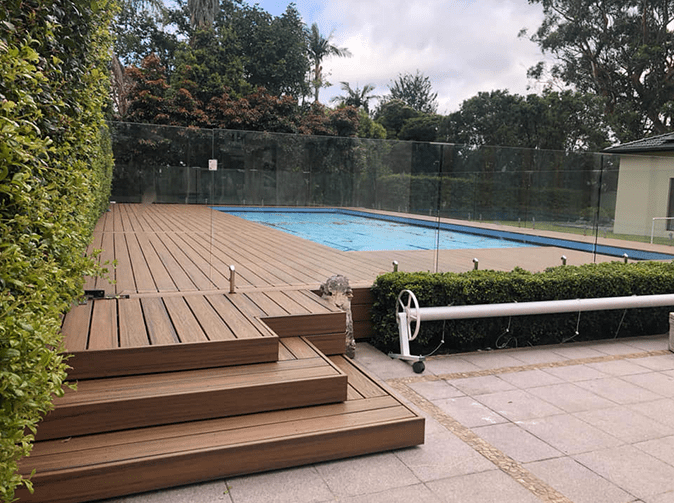
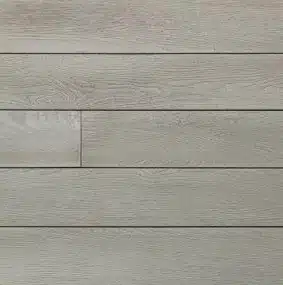
In 2026, composite decking cost in Sydney by material type typically runs $905 – $1,355 per square metre fully installed, including substructure and labour. Woodevo Home and TimberTech AZEK Prime sit at the accessible end ($905–$1,026/m²), Trex Select and Trex Lineage in the middle ($950–$1,199/m²), while premium boards like Millboard Enhanced and TimberTech AZEK Vintage command $1,197–$1,355/m². Board choice, deck height, site access and extras like stairs or balustrades drive where your project lands.
Trex Lineage and Tropicals - installed per sq metre
Trex Select - installed per sq metre
TimberTech Azek Vintage
TimberTech Azek Prime
.
Millboard Enhanced
Woodevo Home range
Woodevo Advanced Range
Get in touch for the full range of boards that we install for our clients scross Sydney, Wollongong and the Southern Highlands.
Prices checked July 2026. Installed figures assume a straightforward single-level deck under 500mm in height; elevated decks, complex shapes and difficult access add cost.
What a real deck costs: 20 m² Trex deck in Sydney. A typical 20 m² single-level Trex Transcend Tropicals deck on level ground: boards and fasteners ~$5,600, substructure (H3 timber frame, footings) ~$4,400, deliveries and waste services ~ $1,500, drawings ~$1,100, labour and finishing ~$7,000 — around $20,340 – $23,980 installed. The same deck in Millboard Enhanced Grain lands closer to $23,940–$26,340. Stairs, balustrades and privacy screens are quoted separately.
Now put your own numbers against it
Those rates are for a level site with a finished deck height under 500 mm. What they can't see is your block — how far off the ground you're building, what the access is like, and whether the ground needs work first. Those three things are what move a price up or down.
Give us twenty minutes on site and we'll turn a range into a fixed, itemised price. We bring the samples, walk the space with you, and you'll know exactly what each part costs.
No obligation and no sales pitch — we'll tell you honestly if we're not the right fit. Family-run since 2017, licensed and insured, 10-year workmanship warranty.
Put a solid deck underfoot without paying too much in overheads with our complete composite decking cost price guide to support your next project.
These boards are renowned and popular thanks to a wide range of features, perhaps most well-known being its splinter-free yet wood-look quality.
That sounds like the best of both worlds to us!
Made from recycled materials but designed to look exactly like natural wood timber, composite decking is more popular than ever here in Sydney, and with many good reasons. But how does this material compare to itself (there’s more than one type) and traditional timber? Are you paying a premium to walk around shoeless? Or is there much more to it than that?
While these decks are a premium product, they’re also an investment. Let’s look at how this material compares to timber decking and what you might expect to pay per square metre, on average, for some of the most popular options in Sydney.
Why go with composite over true timber?
Composite decking has several benefits over timber.
Even price is an advantage, even if it might not seem like it at first blush. Sure, timber costs 30-40% less than most materials. Still, you will spend much time and money maintaining and, ultimately, replacing your timber materials as they wear over time. A timber deck could last up to 10-15 years, whereas a composite deck will last for 25-30 years, minimum.
Composite, then, should be seen as an investment. Future potential buyers for your home will also see it mainly in this light, too. A virtually maintenance-free deck built to last can appeal to even the most indoor-inclined buyers.
But you’re not updating your deck today for someone else. You’re doing this for you and your family. And you’ll reap the benefits of a nearly carefree space to hold your outdoor gatherings. Just rinse with some water (a simple garden hose will do nicely), and your deck should look fabulous for years to come.
This low-maintenance cleanup compares starkly to timber, which requires frequent cleaning and sealing to make it last as long as possible. After all, natural materials degrade over time, especially when facing the many elements and oddities that nature throws its way.
Oh, and did we mention that this material lasts so long because it’s rot-proof and termite-proof, too?
Can’t choose between these two materials? Check out our comparison guide here.
Factors that go into estimating your composite decking cost
You’re convinced that composite is the way to go.Excellent.
Now you’ll want a quote for your project from a professional designer and installer. But what do these pros base their estimates on, and how can you be sure you are getting a fair shake? It comes down to a few key factors.
Size
The materials are priced in square metres, which tells the installer how much material they’ll need to order to get the job done right. The bigger the deck, the more you’ll pay, no matter what it’s made of. Remember that fancy designs, angles, and finishes can add to the cost since more material will be needed to achieve these looks. You’ll also want to iron out whether you need to consider edging, fascia, and other trim work since this will also go into the costs at a per m2 rate.
Material
Next comes your actual choice of material. While all composites are not timber, not all are the same. Different brands approach creating the look of wood with other materials, grains, and mouldings used to make the right look for your deck.
Trex, for example, is the largest manufacturer of extruded timber products. While they’re 95% recycled, they look 100% top-notch and come with a wood-gain finish in a number of colourways. Another premium option is Millboard. This type of deck achieves the wood grain look through designer moulds that impress the shape of a timber board into the outer cap for a truly natural look.
The third we install is TimberTech AZEK. It’s capped PVC rather than a wood composite, so there’s no timber in the board at all — which is why it runs cooler underfoot, handles salt air best, and carries a long fade and stain warranty.
Detail
We mentioned fascia and edging earlier when considering the size and amount of material needed for your deck. But size and level of detail (i.e. intricate cuts and angles) will take time to achieve correctly – and that time costs money.
When you are looking at the cost of a composite deck (or any deck, for that matter, your installer will also have to factor in the costs for the installation work itself. That comes separate from the material costs (which you’ll see outlined below).
Composite decking cost in Sydney by material type
So how much does a composite deck cost?
As you can tell by our explanation, there’s no one-size-fits-all answer since every deck is unique. But there are different cost levels for the brands outlined in the table below to help you estimate your costs.

Materials
- Trex Transcend range
- Millboard Enhanced range
- Millboard Weathered range
- Azek Vintage
- Timbertech Vintage
- Timbertech Prime plus
Board only costs per sq metre – from
$232
$338
$395
$339
$334
$232
Remember: These costs do not include screws, substructure materials, and fees or rates for installation and labour. On average, deck installation labour costs between $200 to $450 per square metre.
Labour is the biggest variable — as Sydney deck builders we price every job on site access, height and design rather than a flat rate.
You may also need to ask your installer about waste removal if you have an old deck or existing materials that you are replacing. These should be hauled away and recycled properly, but there could be additional fees associated with this that can be passed on to customers who are unaware.
Choosing a professional for your decking project
There are a lot of aspects to consider when building out a deck, starting with permits and material orders, ending with designer up lighting, and encompassing every detail in between.
That’s why it matters exactly which professional installer you choose for your job. You might know which material you want to move forward with, but you’ll want the pros to measure, order, and install it properly.
So how do you choose a decking professional and builder?
You start by looking at how much experience they have in the business. Go with someone who has at least 5 years of practice building in your area, where they will be familiar with all of the permit and council requirements that are needed to start with.
Then, ask to see a portfolio (hint: you can check out ours here). While a deck is a structure, it’s also a means to express yourself and add a little designer flair to your home without breaking the bank. A builder with an extensive gallery of project photos can give you an idea of whether their aesthetic matches yours and what you can ultimately expect them to design and build for your property.
If you’re happy with the experience and portfolio, it’s time to ask some more probing questions:
- “Can I speak to any customer references you might have?”
- “How long does a project like mine typically take to complete?”
- “Do you order all of the materials or do I need to manage that separately?”
- “Do you offer free estimates or quotes?”
- “What warranties or guarantees do you back your work with?”
- “Do you take care of any permits or permissions required?”
Putting it together with decking from UrbanArch
These decks may not come cheap, but they do come with a bevy of benefits that simply can’t be overlooked by homeowners today. That’s why these decks are continuing to spring up all over Sydney and the surrounds, as a maintenance free, splinter-in-the-foot free way to make the most of the outdoor spaces that we have. And depending on the size and complexity of your project, you may not need to break the bank to get the deck of your dreams.
The pros at UrbanArch can also work with you to design a deck that optimizes your space and limits material waste, driving down costs as much as possible. We’re experts when it comes to design and installation of decks of all shapes, sizes, and materials.
We’ve been helping homeowners across Sydney add decks, porches, and patios to their homes on time and within budget. Every UrbanArch project starts with and follows a plan specific to each client’s unique needs so you always know where things stand and so we pay attention to every last detail. To learn more about the decking design and installation options we offer, call us on 0413 185 735 for a fast free quote today!
Talk to the people who'll actually build it
You've seen what composite costs. The next question is who's doing the work — and that's where most of the difference between two quotes comes from. Every UrbanArch deck is set out on site before a board is cut, and built by a team we've trained ourselves.
Tony or Dean will come out, look at the site properly, and give you a fixed itemised price — with the boards in your hand, so you can see the difference between Trex, Millboard, TimberTech AZEK and Woodevo before you choose.
Sydney · Wollongong · Southern Highlands. Family-run since 2017, licensed and insured, 10-year workmanship warranty on every build.
Frequently asked questions
Composite decking costs between $905 and $1,355 per square metre fully installed in Sydney in 2026. Woodevo Home sits at the entry end from $905/m², TimberTech AZEK Prime+ from $933/m², Trex Select from $950/m² and Trex Transcend from $1,017/m². Millboard Enhanced and TimberTech AZEK Vintage are the premium ranges at $1,197–$1,355/m².
Those are finished-deck rates, not board prices — they include the substructure, piers, fixings, boards, deliveries, waste removal and a final clean. Board-only prices you’ll find online look cheaper because they leave all of that out.
What actually moves your number is the site rather than the board: how far off the ground you’re building, what the access is like, and whether the ground needs work first. Book a free consultation and we’ll measure it properly and give you a fixed, itemised price.
Because they’re built differently. Millboard has no timber in it at all — the boards are moulded from a mineral-and-resin composite using casts taken from real oak, then hand-coloured, which is why people can’t pick it as anything other than wood. TimberTech AZEK Vintage is capped PVC rather than a wood composite, so there’s nothing in the board for moisture to get into, and it runs noticeably cooler underfoot than a wood-based board in full sun.
That shows up in the price — $1,197–$1,355/m² installed against $950–$1,199/m² for Trex — and in the warranty, where the premium ranges carry the longest cover of anything we install.
Trex isn’t the compromise, though. It’s the best all-rounder we fit for value, colour range and warranty, and it’s what most of our clients choose. Millboard is worth the jump when the look matters most; AZEK Vintage when heat, salt air or a poolside deck do.
Usually yes, if you’re keeping the deck more than about ten years. Composite costs more upfront — from $905/m² installed against roughly $915–$1,022/m² for treated pine or merbau, so the gap at the start is smaller than most people expect. What changes the maths is what happens afterwards.
A timber deck needs washing, sanding and re-oiling every year or two for its whole life. Do that properly and you’re either giving up a weekend each time or paying someone a few hundred dollars to do it. Over twenty-five years that’s a dozen or more rounds of maintenance. A composite deck needs a hose-down a couple of times a year and nothing else — no oiling, no sanding, no re-staining.
Add the lifespan difference and composite usually finishes ahead. Where timber still wins: short-term ownership, a tight upfront budget, or when you genuinely want the grain and patina of real hardwood — and ironbark and blackbutt are beautiful, bushfire-rated boards we’re happy to build with.
Roughly $18,100–$27,100 installed depending on the board. As a real example, a 20 m² Trex Lineage deck on level ground comes in between $19,100 and $21,000 – fully installed with all piers, substructure, joist flashings, hidden fasteners, deliveries and waste removal.
Because most composite decking prices you’ll see quoted are for boards only. Ours are for a finished deck — substructure, piers, fixings, labour and rubbish removal — which is why they look higher at first and end up lower once you’ve added everything a board price leaves out. If one quote is $200/m² cheaper than another, that gap usually reappears later as variations. Ask every builder what’s excluded before you compare the numbers.
Usually more than it costs, though nobody can promise you a number. Agents around Sydney consistently list outdoor living as one of the features that moves a sale, and a composite deck presents better at inspection than a timber one that’s a year overdue for oiling — the colour is even, there’s no greying at the edges and no soft boards near the steps.
The practical advantage is that it looks the same in year eight as it did in year one, so you’re not doing a rushed sand-and-oil before the photos. If you’re selling within a couple of years, the honest answer is that timber will cost you less and probably show just as well. If you’re staying, that’s when composite earns its money — and either way we’ll tell you which one suits your plans.
Close to nothing. A hose-down and a wash with warm soapy water twice a year, and a soft brush on anything that’s been sitting — leaves, fruit, spilled drinks. No oiling, no sanding, no sealing, no annual coat of anything. Compare that to a timber deck, where you’re either giving up a weekend every year or two or paying someone a few hundred dollars to do it, and the maintenance line is where most of the long-run saving actually comes from.